
How Many Miles in Those Body Lotions?
Why Formulation Decisions Impact Emissions
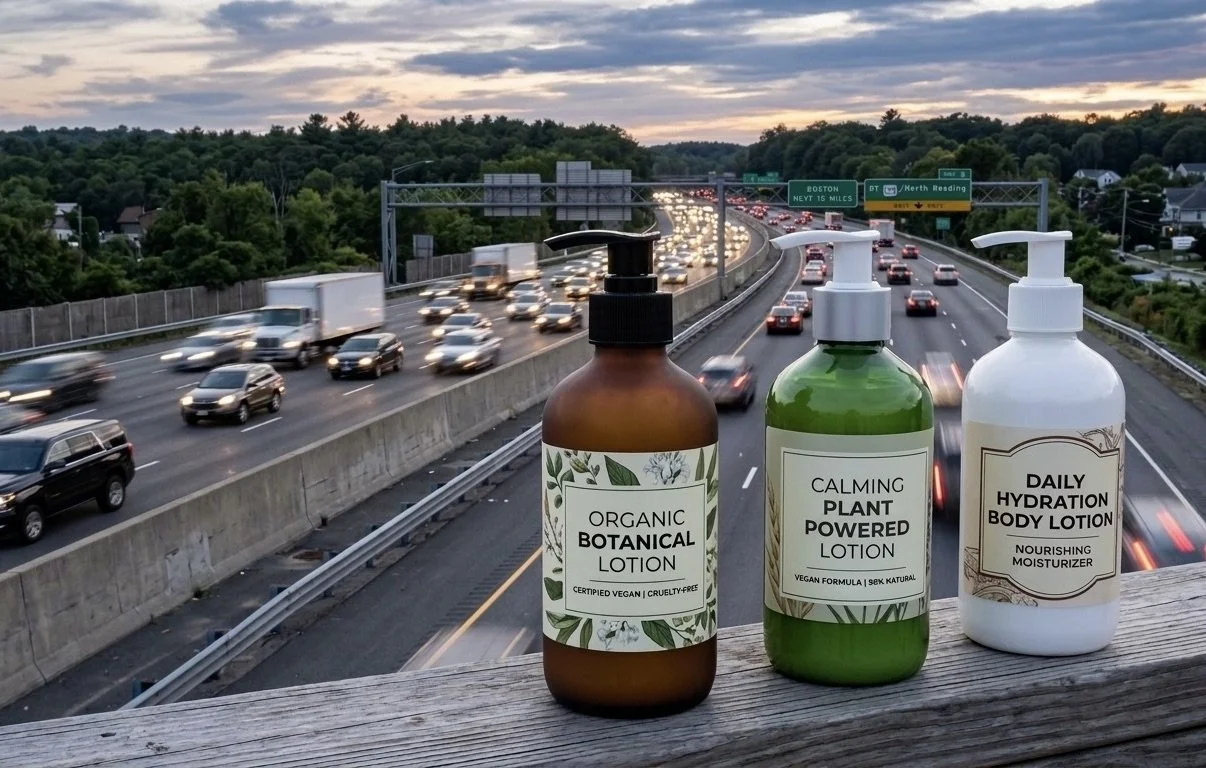
A Comparative Case Study of Three 32oz Body Lotions
Body lotion may be mostly water, but for brands measuring Scope 3 emissions, its ingredient choices can meaningfully shift the carbon ledger.
For this case study, we compared three anonymized 32oz lotions:
Vegan Lotion 1 – simplified plant-oil system
Vegan Lotion 2 – multi-oil botanical system
Non-Vegan Lotion – conventional mixed-origin formula
All estimates are cradle-to-gate (raw materials through formulation), excluding packaging, distribution, and end-of-life.
Carbon Footprint per Bottle
Estimated emissions per 32oz bottle:
Vegan Lotion 1: ~1.4–1.9 kg CO₂e
Vegan Lotion 2: ~1.7–2.3 kg CO₂e
Non-Vegan Lotion: ~2.2–3.0 kg CO₂e
At the midpoint, the highest-impact formula is roughly 60% more carbon-intensive than the lowest.
Assuming ~0.4 kg CO₂e per mile for a typical gasoline vehicle, this is equivalent to driving these many miles:
Vegan Lotion 1: ≈ 4 miles
Vegan Lotion 2: ≈ 5 miles
Non-Vegan Lotion: ≈ 6.5 miles
Using an entire bottle of lotion roughly equals driving across town once.
For a single bottle, that may not seem dramatic — but differences grow when scaled across millions of units.
Impact at Scale
If each product sells 1 million bottles annually:

The gap between the lowest- and highest-impact formulas equals roughly 950 metric tons of CO₂e per year per million bottles sold.
In terms of driving distances, the production of million bottles translates to 4–6.5 million miles which is equivalent to:
Driving around the Earth 160–260 times
The annual driving of roughly 800–1,300 average passenger cars
(assuming ~12,000 miles per year per car)
And importantly:
The difference between the lowest- and highest-impact formula at 1 million bottles equals:
~2.4 million miles of driving avoided per year
That’s where formulation choices start to look like transportation-scale climate decisions.
At brand scale, ingredient choices become climate-relevant decisions.
What’s Driving the Differences?
The short answer: formulation structure matters more than marketing labels.
Animal-Derived Ingredients
The Non-Vegan Lotion contains lanolin oil (derived from sheep wool). Animal-derived ingredients often carry higher embodied emissions due to methane and processing intensity. This is the single largest structural differentiator in the comparison.
Oil Type and Complexity
Vegan Lotion 2 includes shea butter, avocado oil, and multiple seed oils. While plant-based, these ingredients require agricultural inputs, processing, and often long-distance transport. A more diverse oil system increases cumulative impact.
Vegan Lotion 1 uses a simpler emollient system with fewer total oil types, which helps reduce its footprint.
Alcohol Content
The Non-Vegan Lotion lists alcohol high in the ingredient list. Ethanol production requires fermentation and energy-intensive distillation, increasing emissions when used in larger amounts.
Silicones and Synthetics
All three products contain dimethicone. Silicones have moderately high per-kg emissions but are used in relatively small concentrations, making them contributors — not primary drivers.
Is Vegan Automatically Lower Carbon?
Not necessarily.
In this comparison, the vegan formulas performed better overall, but the difference between the two vegan lotions shows that plant-based does not automatically mean low-impact. Ingredient quantity, type, and complexity matter more than the presence of a vegan claim.
The lowest-impact formula was not just vegan — it was structurally simpler.
The Bottom Line
Across three comparable 32oz lotions:
Vegan Lotion 1 had the lowest estimated footprint due to simpler plant-oil composition and no animal inputs.
Vegan Lotion 2 ranked in the middle, driven by a more agriculturally intensive oil blend.
Non-Vegan Lotion had the highest footprint, primarily due to lanolin and higher alcohol content.
For an individual consumer, the per-use impact is modest. But at scale, formulation decisions can shift emissions by hundreds — or thousands — of metric tons annually.
Sustainability, in this case, isn’t just about whether a product is vegan. It’s about how it’s built.
Driving Your Brand Toward Lower Carbon
This comparison is intended as an illustrative example of how formulation choices can influence carbon impact. In practice, product carbon footprints can vary widely depending on factors such as:
ingredient sourcing and supplier practices
formulation percentages and processing methods
manufacturing energy and packaging choices
At New Sky, we work with brands to quantify product-level emissions and identify practical opportunities to reduce them. If your team is exploring product carbon footprints or lower-impact formulation strategies, we’d be glad to help.